
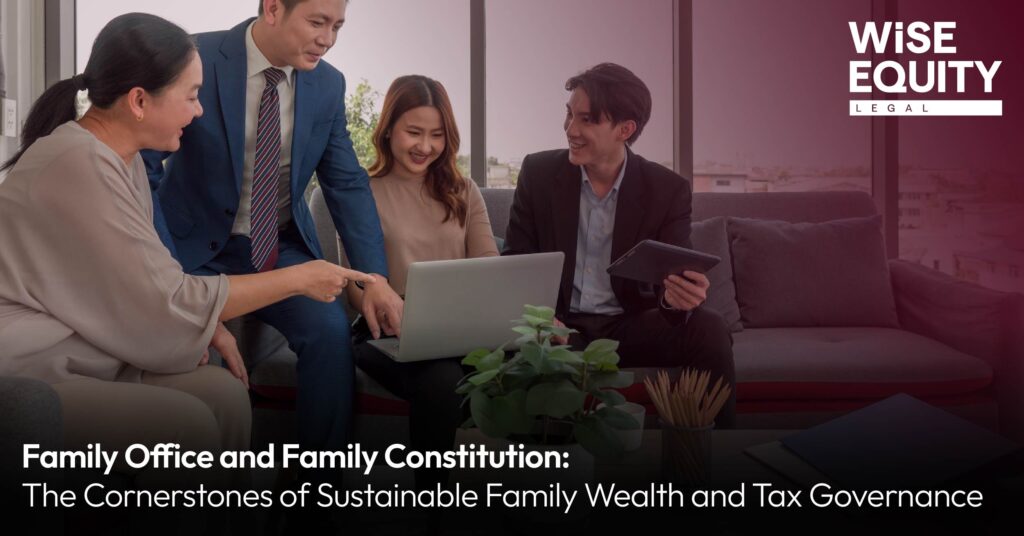
Family Wealth Doesn’t Fail Because of Business. It Fails Because of Structure.
|
In Asia, and particularly in Thailand, family-owned businesses remain a dominant economic force. Yet, statistics consistently show that only a small percentage of family businesses successfully transition beyond the second or third generation. The challenges are rarely commercial alone; more often, they arise from governance gaps, unclear succession, tax inefficiencies, and unresolved family dynamics.
Two structures have increasingly emerged as essential tools for long-term sustainability: the Family Office and the Family Constitution.
At Wise Equity Legal, we view these instruments not merely as governance documents or administrative functions, but as strategic tax and wealth-preservation frameworks that align family values, business continuity, and regulatory compliance.
What Is a Family Office?
A Family Office is a dedicated structure established to manage the financial, legal, tax, and administrative affairs of a family. Depending on scale and complexity, it may take the form of a Single Family Office (SFO) or a Multi-Family Office (MFO).
Typical responsibilities include:
From a tax perspective, the Family Office often acts as the central command center, ensuring consistency in reporting, optimizing tax efficiency, and mitigating exposure to regulatory or cross-border risks.
In Thailand, where family assets frequently span operating companies, real estate, offshore investments, and family funds (กงสี), a properly designed Family Office helps ensure that tax structuring evolves in step with family growth, rather than reacting after disputes or audits arise.
The Family Constitution: Governance Beyond Legal Formalities
A Family Constitution (sometimes called a Family Charter) is a written framework that records the family’s shared values, governance principles, and long-term vision. While it is generally not always legally binding, it plays a decisive role in shaping behavior, expectations, and decision-making.
A comprehensive Family Constitution typically covers:
1. Family Values and Legacy
2. Family Governance Mechanisms
3. Ownership and Business Policies
4. Succession and Next-Generation Planning
5. Conflict Resolution and Confidentiality
These elements are particularly critical in Thai family businesses, where emotional ties and informal practices often coexist with increasingly complex commercial and tax realities.
Why Tax Considerations Must Be Embedded from the Start
A common mistake in family governance planning is treating tax as a downstream technical issue. In reality, tax outcomes are deeply influenced by how governance, ownership, and decision-making are structured.
When a Family Constitution and Family Office are designed in isolation from tax planning, families may face:
By contrast, when tax considerations are embedded early:
At Wise Equity Legal, we integrate tax structuring, legal documentation, and family governance design into a single advisory framework, ensuring that what works in principle also works in practice.
The Strategic Link Between Family Office and Family Constitution
The Family Constitution defines the “rules of the game”, while the Family Office implements them.
In practice:
This dual structure helps families move from personality-driven decision-making to institutionalized governance, without losing their identity or values.
A Long-Term Investment in Stability and Continuity
For families with growing assets, multi-generational businesses, or cross-border exposure, the question is no longer whether to establish a Family Office or Family Constitution, but when and how.
When designed thoughtfully, these tools:
Wise Equity Legal advises families at every stage, from first-generation founders to complex multi-branch family groups, by crafting Family Office and Family Constitution frameworks that are legally practical, tax-efficient, and aligned with long-term legacy objectives.
For further information or discussion on family governance, succession planning, and the structuring of sustainable family wealth in Thailand, please contact Chanattorn Thunyaluck, Partner and Head of the Tax Practice, at chanattorn.t@wiseequitylegal.com.
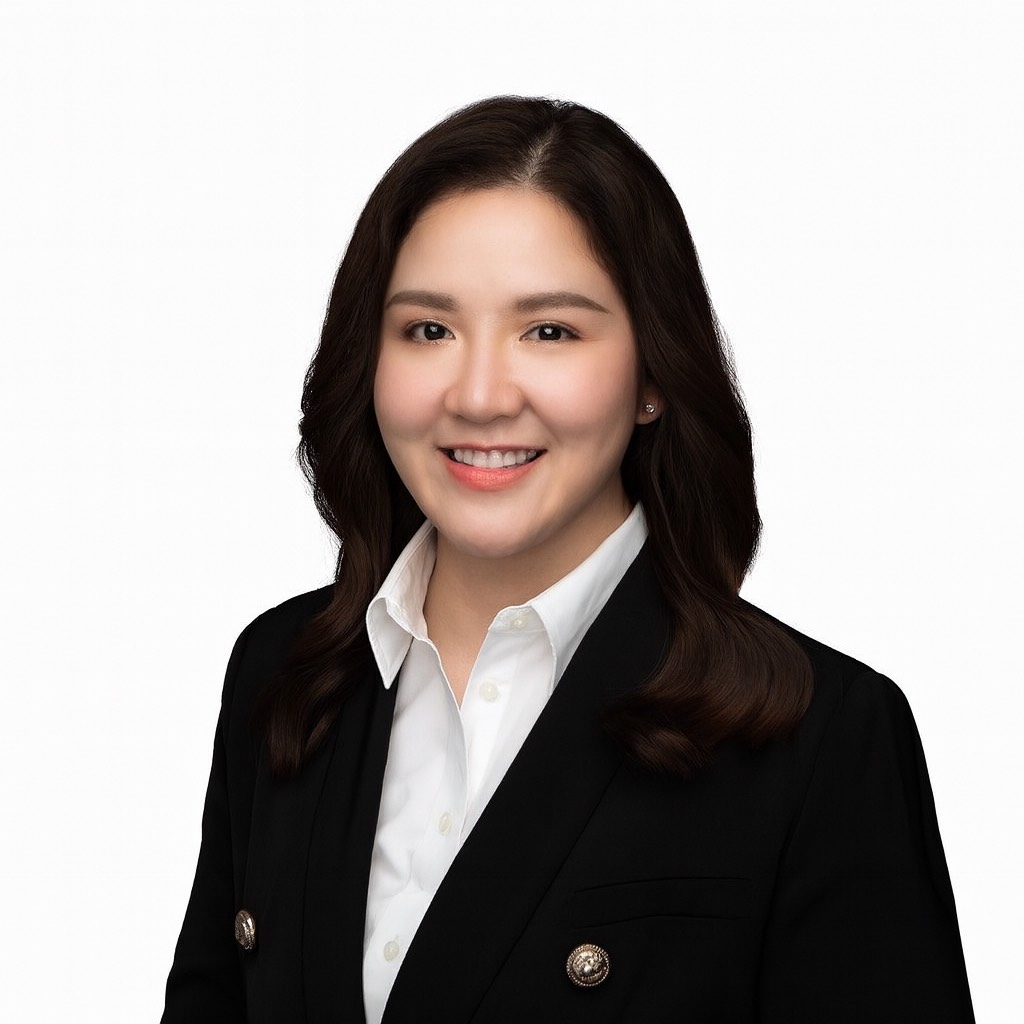
Chanattorn Thunyaluck