

Q2 2026: One Door Opens, One Gate Tightens Two SEC developments in Thai capital markets this quarter.
The effective date has passed. If your onboarding framework hasn’t been reviewed against it, the gap is live. |
More room to innovate. Less room to hide. |
In this series of quarterly regulatory updates, Wise Equity Legal Counsel Limited aims to highlight key developments in the Thai capital markets and digital asset regulatory landscape. Below is our recap for the second quarter of 2026.
1) SEC’s Revision of Regulatory Framework for Tokenized Funds to Promote Innovation in the Investment Sector
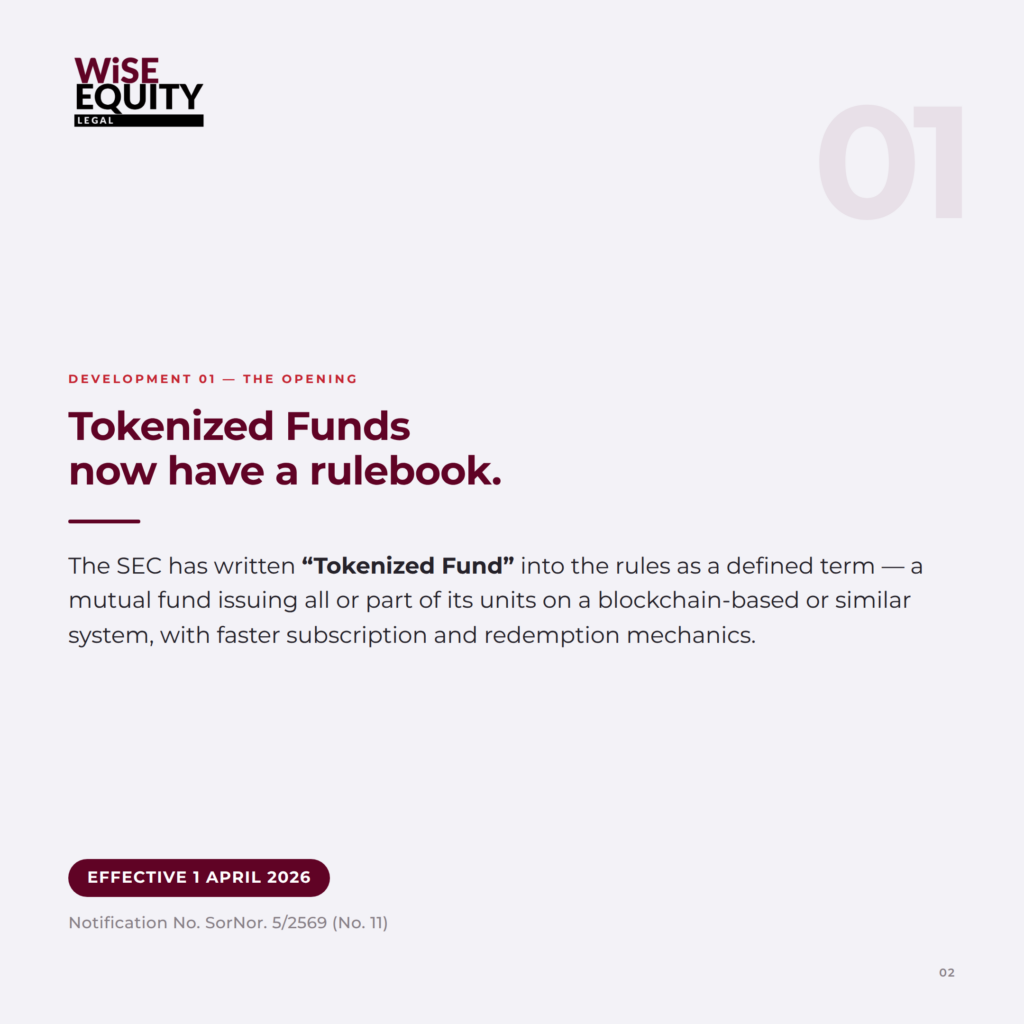
The Securities and Exchange Commission (SEC) has amended the regulatory framework governing the subscription and redemption of mutual fund units issued in tokenized form (“Tokenized Funds”) to facilitate faster transactions and provide greater clarity and appropriateness in the operation of such funds. The amended regulations became effective on 1 April 2026.
Under the Notification of the Office of the Securities and Exchange Commission No. SorNor. 5/2569 Re: Details of the Mutual Fund Management Scheme (No. 11), a new definition of “Tokenized Fund” was introduced, referring to a mutual fund that issues its fund units in tokenized form.
In addition, the Notification of the Office of the Securities and Exchange Commission No. SorNor. 5/2569 also introduces additional rules applicable to Tokenized Funds. In particular, a Tokenized Fund refers to a mutual fund that issues all or part of its fund units on an electronic system or network using blockchain technology or other technology of a similar nature.
The amendments also provide a regulatory framework to facilitate faster processing of subscriptions and redemptions of Tokenized Fund units, including adjustments to certain requirements relating to the increase or cancellation of fund units following the subscription or redemption of such units. The amendments are intended to accommodate the use of blockchain and similar technologies in mutual fund operations while providing greater clarity and flexibility for market participants.
The amendments form part of the SEC’s broader efforts to accommodate developments in financial technology and promote innovation in the investment sector.
2) SEC Issues New Guidelines to Strengthen Customer Due Diligence and Transaction Monitoring to Combat Cybercrime
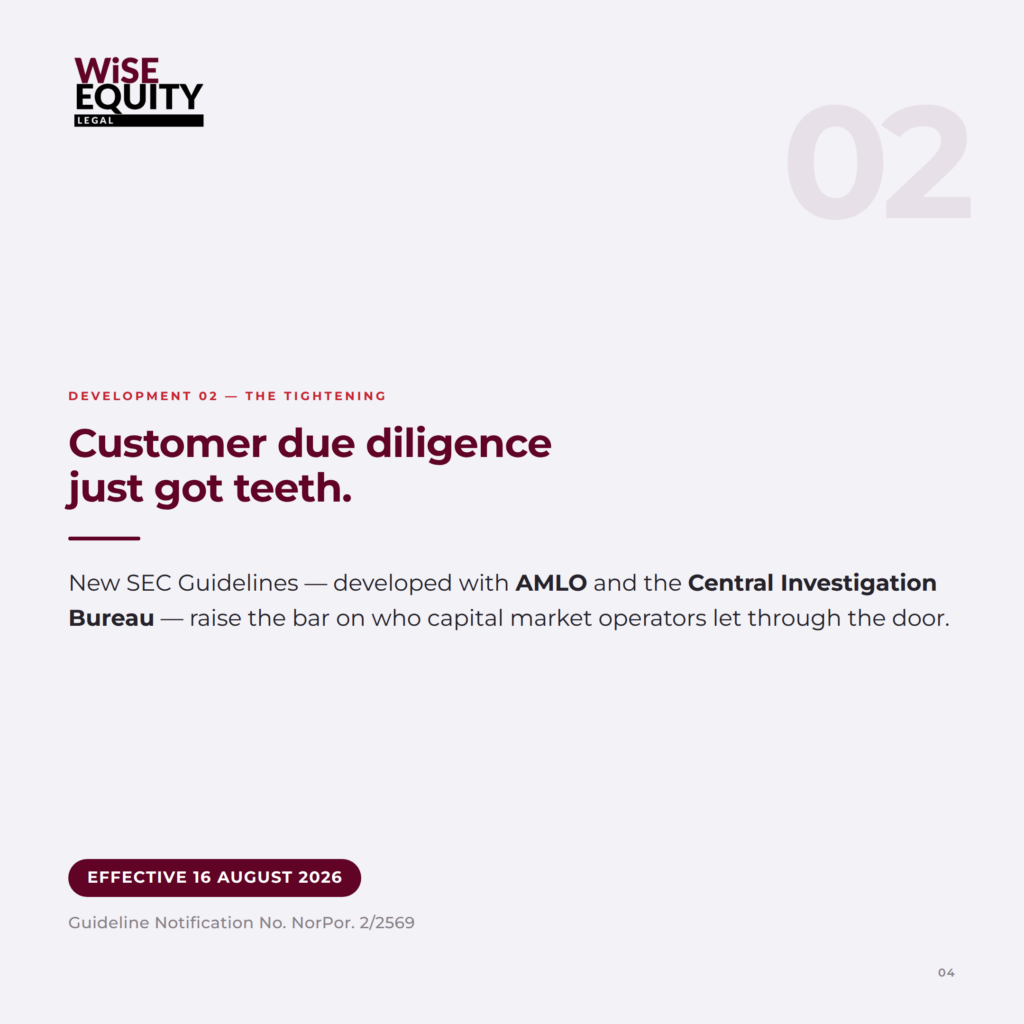
On 29 May 2026, the SEC issued the Guideline Notification No. NorPor. 2/2569 Re: Customer Due Diligence for the Identification of Ultimate Beneficial Owners and Ongoing Customer Transaction Monitoring (the “Guidelines”). The Guidelines were developed through collaboration among the SEC, the Anti-Money Laundering Office (AMLO), the Central Investigation Bureau (CIB), and the capital market business sector, and came into effect on 16 August 2026.
The Guidelines require capital market business operators to strengthen their customer due diligence (“CDD”), know-your-customer (“KYC”), and ongoing transaction monitoring processes in accordance with customers’ respective risk profiles. The Guidelines are intended to prevent the capital market from being used as a channel for money laundering and cybercrime.
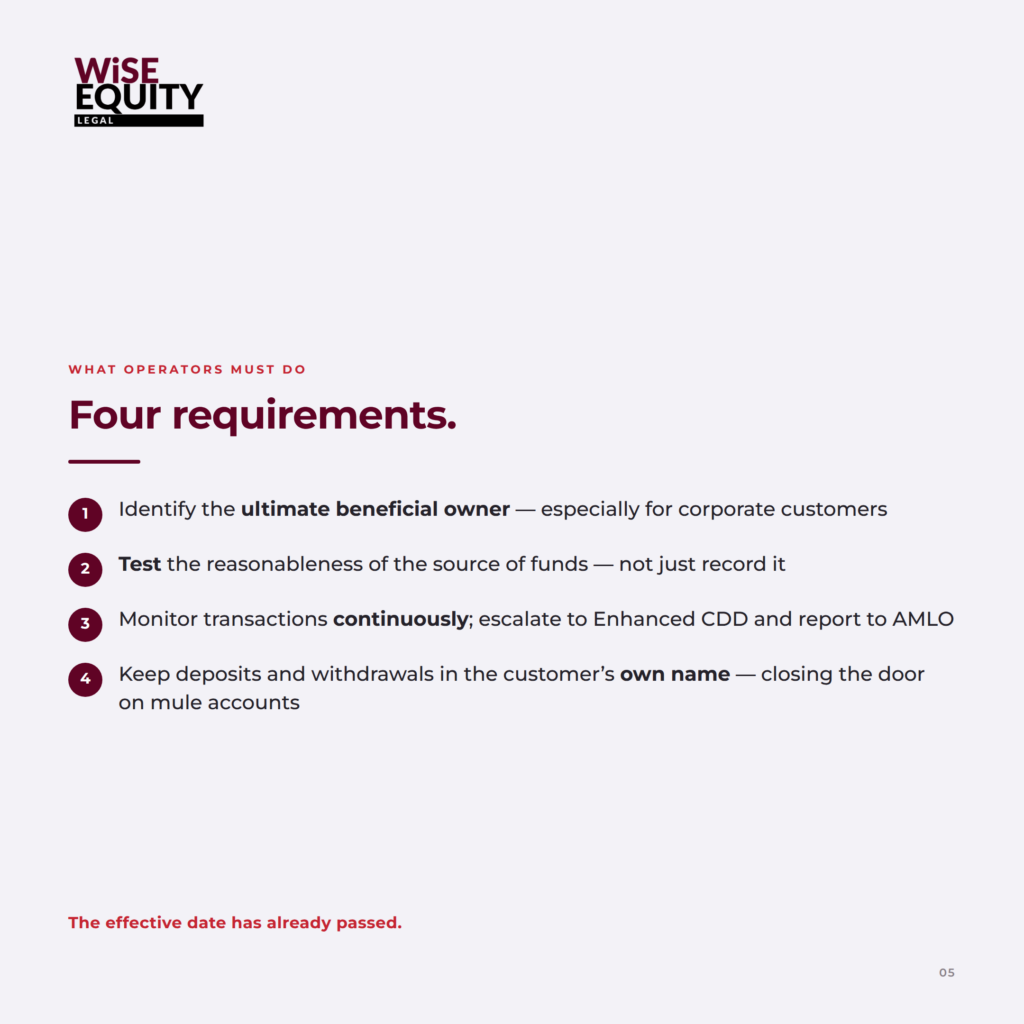
Under the Guidelines, business operators are required to apply enhanced measures throughout the customer onboarding and monitoring processes, including identifying the ultimate beneficial owner (“UBO”), particularly in the case of corporate customers, assessing the reasonableness of the source of funds, and continuously monitoring customers’ transactions. Where unusual or suspicious activities are identified, business operators are required to conduct enhanced customer due diligence (“Enhanced CDD”) and report suspicious transactions in accordance with the applicable requirements of the AMLO.
The Guidelines also require business operators to establish appropriate controls over fund transfers into and out of customer accounts to ensure a clear audit trail. For example, fund deposits and withdrawals should be made through bank accounts held in the same name as the customer. These measures are intended to prevent the use of mule accounts and mitigate risks relating to money laundering and other financial crimes.
———
Talk to us – If either development touches your business, our capital markets and digital assets team is happy to walk you through it.
Contact us – Karinevidch Olivero at karinevidch.o@wiseequitylegal.com, Atis Kantakamalakul atis.k@wiseequitylegal.com or Jedsada Vittayatigonnasak jedsada.v@wiseequitylegal.com.